About
The Early Years
My mother bought me my first guitar when I was eleven, growing up in North Wales — a solid nylon string acoustic, wrapped up for Christmas. At the time I was obsessed with Bond films, particularly the music. John Barry’s use of Eastern scales and minor tonalities was the first thing that made me want to understand how music actually worked. I taught myself the Bond theme, the Dr Zhivago theme, then moved onto chords with House of the Rising Sun.
Influences
From there it was Andy Summers — his use of power chords with an added 9th is one of the most distinctive sounds in guitar, and I spent a long time getting inside that. Hendrix used those same intervals in a completely different way, which led me to spend years working through his catalogue.
Then This Charming Man came out, and Johnny Marr changed everything.
That led me back to John McGeoch from the Banshees, and I realised I’d always been a post-punk player rather than a straight-ahead rocker — Hendrix excepted.
The early nineties brought PJ Harvey and the Riot Grrrl scene, which reinforced everything I already believed about guitar — that attitude and tone matter more than technique, and that the most interesting players are usually coming from somewhere oblique.
Now
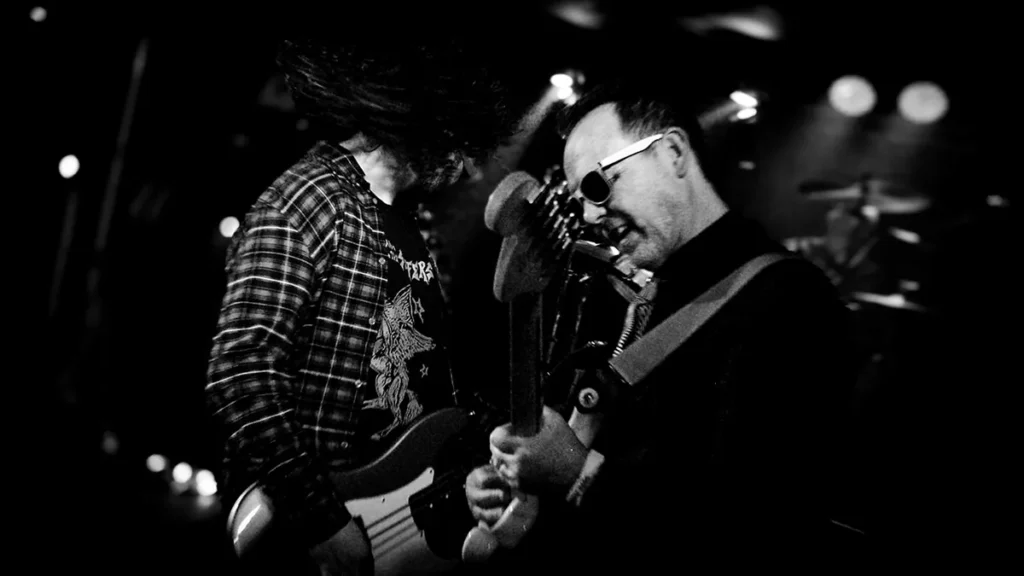
Over the years I’ve played in cover bands covering everything from the Beatles to funk and disco. These days I play punk covers with The Expletives and run an ambient instrumental project called Morfa, using a Kemper Profiler live.
I learned music theory on a piano — I’m not a piano player, but a keyboard lays everything out visually in a way a guitar neck doesn’t.
This blog is where I write about all of it — gear (including what the Kemper actually does for a working live guitarist), music theory approached from a player’s perspective rather than a classroom, reflections on forty years of performances and cover bands, and the kind of things you only learn by doing it for a long time.