When teaching yourself guitar, as I did in the late 70s, you’re soon going to bump up against guitar chords with these weird names ‘Dsus4’ ‘Dsus2’ ‘Cadd9’ ‘G7sus4’ and even (particularly if you’re a Hendrix fan), ‘G add 9 no 3rd’.
Leaving Cadd9 aside for the moment (and don’t ask your teenage child this), what does sus mean? Suspect, suspicious?
They kind of are, funnily enough. A sus chord is a chord hiding something. Specifically, it’s hiding whether it’s major or minor, either temporarily, or, if the person playing it is feeling particularly unresolved and happy to leave things floating, indefinitely.
This started, as these posts tend to, with a Facebook thread. Someone was asking about “sus” chords without quite getting what “sus” meant, understandably, nobody tells you it’s short for suspended, and nobody explains that the major 3rd, the note that decides whether a chord is happy or sad, has simply gone missing.
What’s the fuss about ‘sus’ all about?
Music theory alert!
Every major or minor chord is built from an underlying base of three notes, the root, the 3rd, and the 5th. The 3rd is the one doing all the work, it’s the note that decides whether the chord sounds happy or sad. Move it a semitone and the whole chord flips character. One fret (semitone) is the entire distance between the two. It’s roughly the McCartney/Lennon split, if that helps, McCartney’s chipper major-key optimism against Lennon’s moodier, more minor instincts.
A sus chord removes this 3rd note altogether and replaces it with a neighbour, either the note above it or the note below. Which is why a sus chord sounds neither happy nor sad. The note that would answer whether it’s major or minor has simply been taken away.
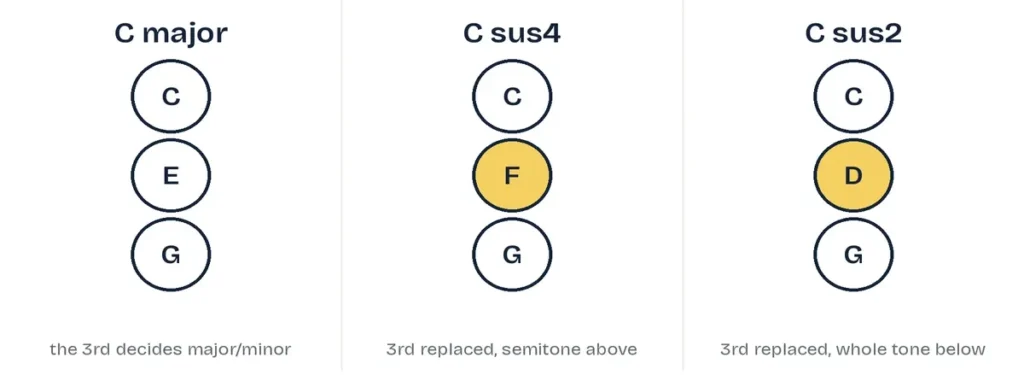
Take C major: C E G. The E is the 3rd, the note doing the deciding.
- Csus4 replaces the E with an F, the note a semitone above it: C F G
- Csus2 replaces the E with a D, the note a whole tone below it: C D G
Neither chord tells you if it’s happy or sad, because the note that would tell you isn’t there. The chord is withholding information, and your ear knows it, which is why a sus chord almost always sounds a bit up in the air, and wants to resolve, back to the E if major (a happy ending, if you will), or to Eb, minor and a sadder outcome.
This is all very poetic, I know, I know.
Plenty of budding guitarists meet a sus chord before they ever meet the theory. The classic accident is the open A7 shape played on the wrong strings, and out comes this open, spacey, slightly unplaceable sound, (an E7sus4).
So generally, because of this floating about, left there hanging nature, they are resolved quickly, a la Pinball Wizard style. They are used as a nice little flourish, or indeed as the basis for an opening riff, if you’re Pete Townshend for example, or indeed Brian May and crazy about a thing called love..
But if you’re crazy about a thing called punk or post-punk, why resolve them..? Why not let them hang?
My young ear’s first encounter with this unresolved sound was via one certain Mr Andy Summers playing a heavily flanged G7sus4 chord on Walking on the Moon (not the most punk song I grant you). Sus chords turn up frequently in ambient and spacey music precisely because they’re unresolved, they hang in the air rather than landing anywhere, and that’s maybe a considered choice for a song that’s meant to feel like it’s bouncing about, in minimal gravity?
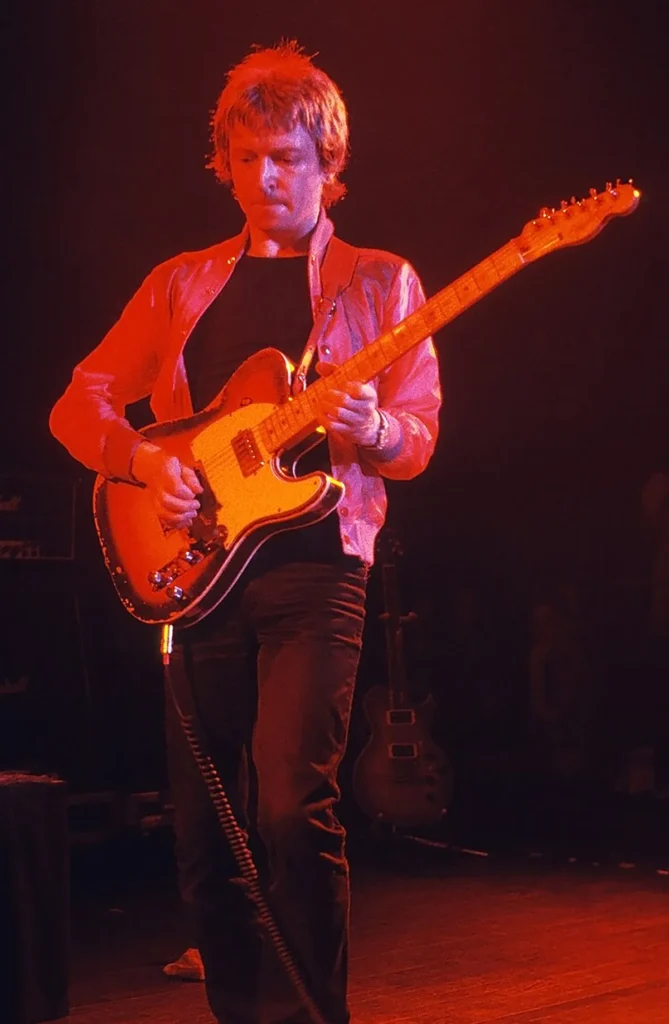

The 7sus4 chord is actually your standard sus4 chord (so no major/minor 3rd), but with a flat 7th added in for good measure, to make it even more unresolved. Flat 7th (‘dominant’ 7th) chords are unresolved too, questioning chords, and they typically want to resolve to a chord four steps higher, (G7 to C for example). Swap out the 3rd note to a 4th in a 7th chord, and you’re getting seriously spacey. Throw in an Electric Mistress pedal and a ton of delay, and you’re on your way out of the Solar System.
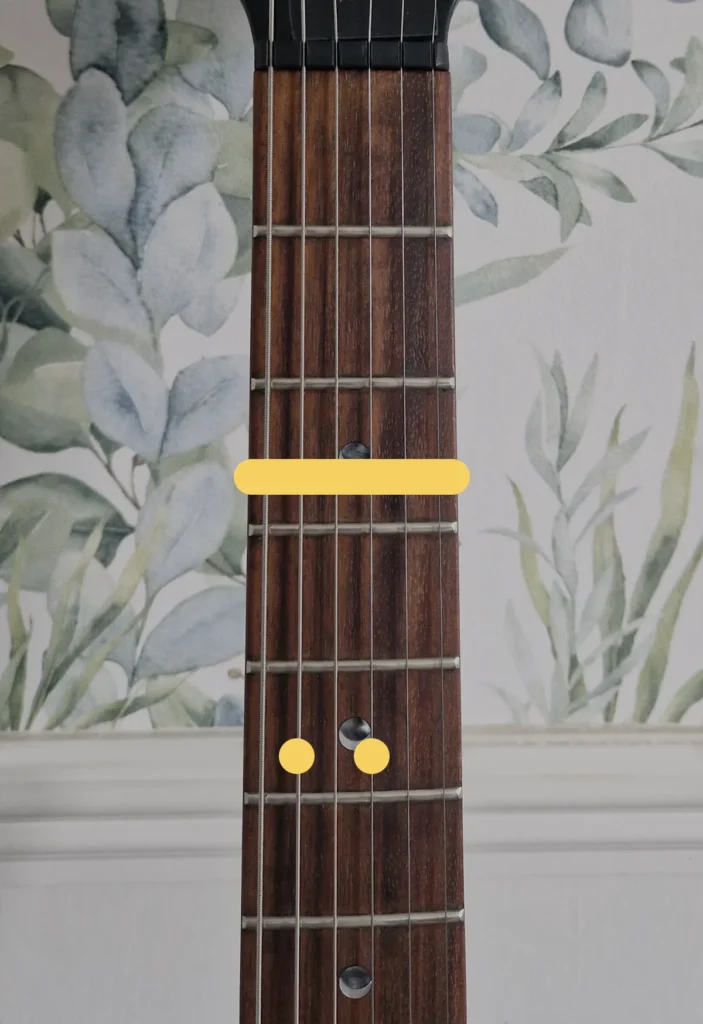
In 1964, George Martin and the Beatles were fishing around for a similar big and questioning opening chord, and going to far more elaborate lengths to get there. That opening chord of A Hard Day’s Night is famously hard to pin down, so much so it took a mathematician armed with Fourier transforms to work out what was actually being played, but you can approximate it with the same chord from Walking on the Moon, G7sus4.
OK, but what’s an ‘add’ chord?
If a sus chord removes (‘suspends’) the 3rd with another masking note, an add chord keeps it and adds an extra note, for example the 9th, on top.
So Cadd9 is formed of the notes C E G with a higher D added on top: C E G D. The 3rd, the E, is still there, so the chord is still unambiguously major. Nothing’s been hidden. It’s just been given a bit of shimmer, an extra topping to your bog standard cheese and tomato pizza, if you will.
Wait, aren’t there only 8 notes in a scale generally? Well, yes but the guitar can do more than one ‘octave’ and a piano can play loads. Eight notes gets you through C D E F G A B C but why stop there? So you will see chords labelled C11, C13 and if you’re getting very jazzy, C#9b13th.. Don’t worry about this too much for now, there’s a few rules about these ‘extended jazzy chords’ so I’ll stick to this idea of simply adding one extra note for now, Cadd9 and so forth.
What about something like Cadd2? Well, it’s similar actually, to the add9 chord but the 9th note has dropped down to be nearer to the root note, the ninth note of say the C major scale is D, but the second note is also D, but not as far away from the root of C. In truth these are more relevant to the piano and the ‘yacht rock’ era, in that it’s practically impossible to play Cadd2 chords on a guitar. Notes next to each other in pitch terms are dead easy to play on a piano, they’re right next to each other on the keyboard. Not so much on a guitar (unless you’re somebody like Allan Holdsworth), and if you ever saw one on a chord sheet, it’s probably an add9 chord mis-labelled. The add2 chord was a favourite of Steely Dan (hence my Yacht Rock label) and they gave it a pet name of Mu, the ‘Mu chord’.
Wait. No 3rd?
I am a big Hendrix fan, and have been since aged around 14, pre internet of course (I’m that old) but managed to bag myself an excellent book on how, basically, to play like Hendrix, particularly his more soulful stuff like Wind Cries Mary and of course, Little Wing (can’t since ever find it, so don’t ask).
I get the impression that Hendrix loved his added 9th chords, and they are beautiful. Ever the innovator, I think he figured out that, with your top 4 string F shape with the added 9th included on the top E string, in certain positions you could lift your second finger off and leave the G string open, like a mini drone effect. Sliding this chord shape around the fretboard gives you the opening sequence to Castles Made of Sand, and certain bits of Little Wing.
Removing your second finger takes the major 3rd away from the chords in this instance and so the chords are labelled ‘G add 9 no 3rd’ or Bb add 9 no 3rd. As above, these are of course similar to suspended chords, there’s no major or minor 3rd included, but they are not labelled like ‘Gsus9’. I guess the respective author(s) of the transcriptions are making the point stronger that the 3rd has gone, but nothing is replacing it, like a 4th or 2nd, so not a suspended chord as such.
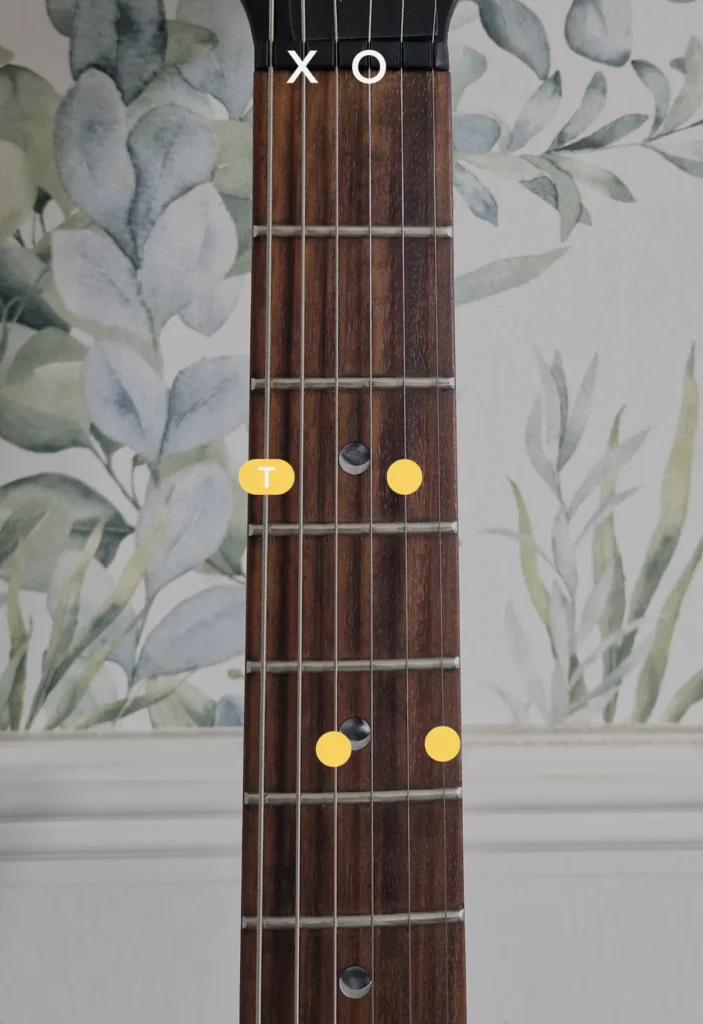
A Black Sabbath two or three fingered power chord with no third, just root and fifth, you wouldn’t label as a sus chord either as there’s nothing replacing the missing 3rd, so you’ll sometimes see these labelled as something like ‘E no 3rd’.
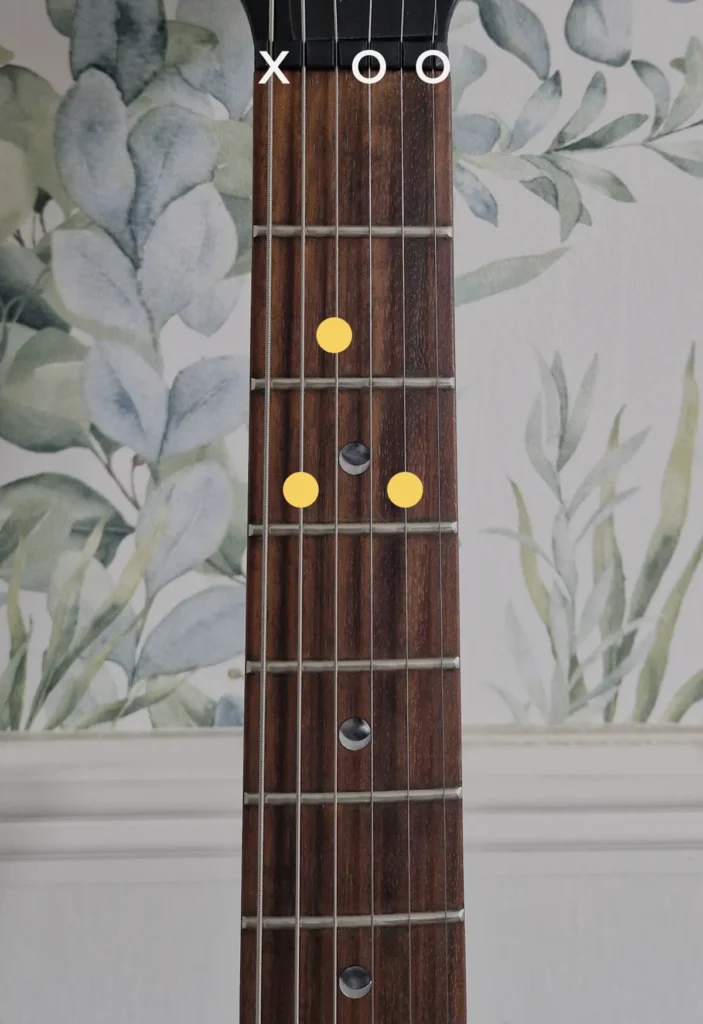
Coming back to Hendrix’s added 9th chords with no 3rd, what if you played them on the lower strings, like a cross between Sabbath and Castles Made of Sand? Well, now you’re back into Andy Summers territory, particularly on Message In a Bottle, where he arpeggiates these (super fast!). Here’s the shape shown at the second fret of the low E string, so effectively F# add 9 no 3rd.
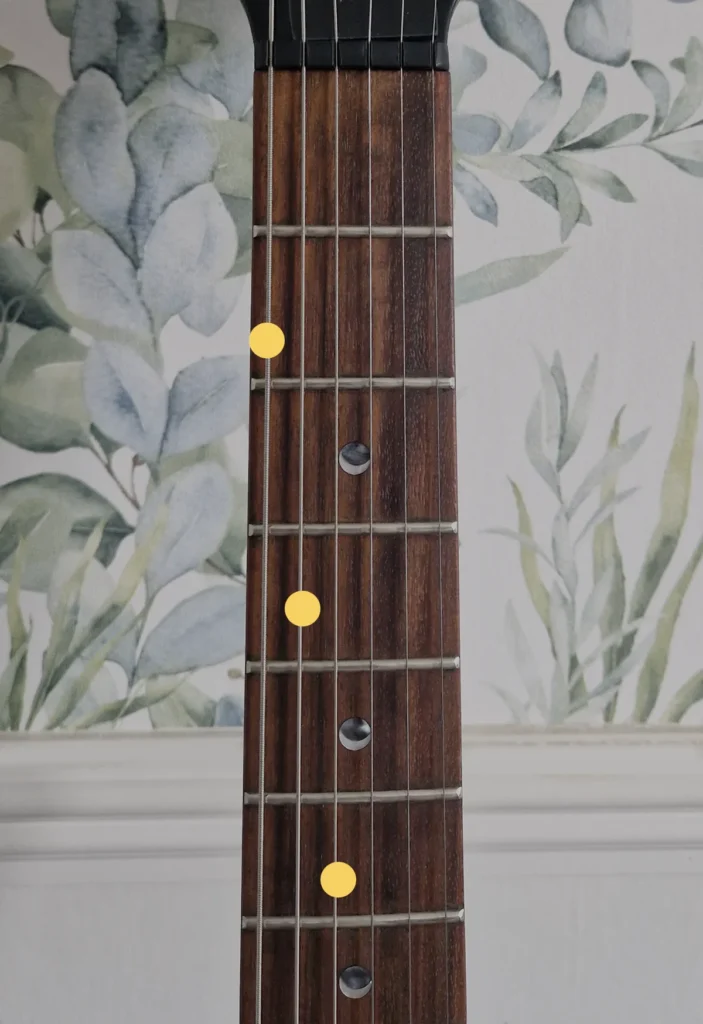
Not the easiest thing to play, and a real workout for stretching out your fingers. Would there be an easier way to play these ‘power chords with an added 9th’?
Drop D tuning makes these lower add9 (no 3rd) shapes far, far easier to play starting on the E (now D) string, you don’t need to stretch your fingers nearly as much and the shape sits comfortably under your fingers. Everlong by the Foo Fighters is littered with them. They’re all over the rockier end of Shoegaze 90s music too, it’s interesting (to me at least) that the sound of Andy Summers from the late 70s came back in such a way.
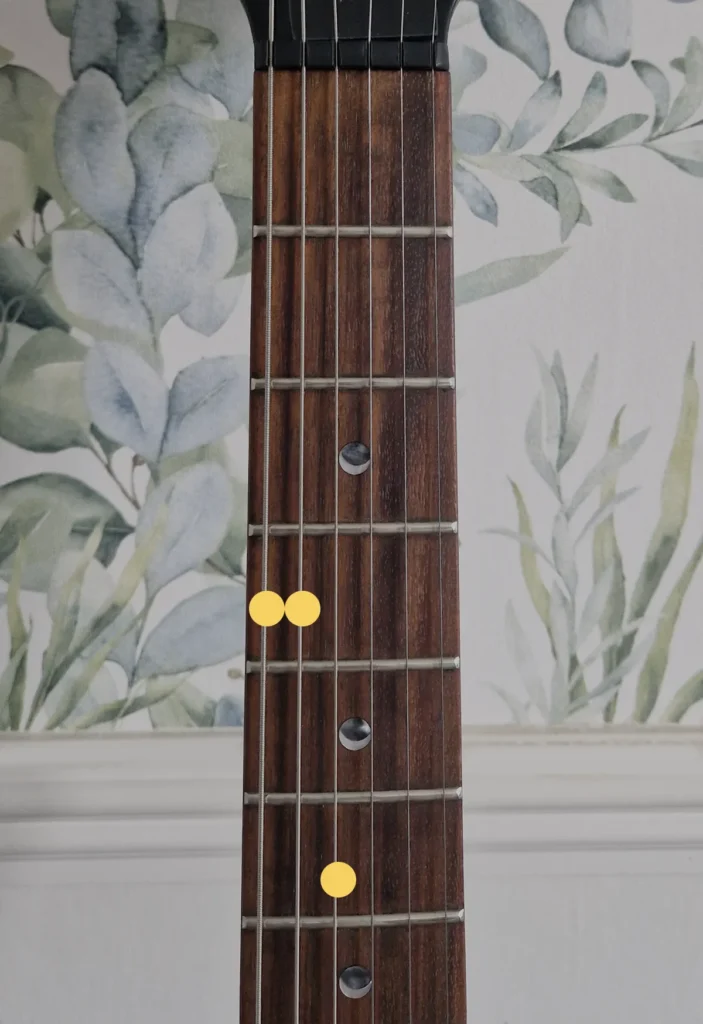
The suspicious chord, resolved
So, sus chords are suspicious, quite literally, they withhold the one piece of information that would tell you how to feel about them. The sus means the third note is suspended, masking whether it’s major or minor.
Add chords aren’t hiding anything, they’re just dressed up with additional toppings (hopefully not anchovies, yuk). They can be major (Cadd9), or minor if you’re feeling particularly ‘James Bond-sey’ (Em add9 or Em add6). Interestingly, on that last point, you’re more likely to see it written as Em6 rather than ‘Em add6’, and I’m honestly not sure why, a quirk of chord labelling maybe?
In terms of letting sus chords hang or using them in interesting ways, one proponent I’ve not mentioned is John McGeoch. This is deliberate on my part, if you’ve ever covered any Banshees songs, you’ll recognise the 7sus4 shape, in Happy House, Spellbound. To my mind, John McGeoch is so influential in modern guitar music and I’ve seen that so many times in interviews with guitarists I admire, Johnny Marr, Ed O’Brien and others, and it’s a bit daunting to try and cover John McGeoch in a single paragraph, that’s obviously a cue for another post at some point.
The cover image for this post is an official copy of Electro-Harmonix’s Andy Summers signature ‘Walking On The Moon’ flanger, kindly provided by Mike Matthews, CEO of EHX. Rock and roll indeed!