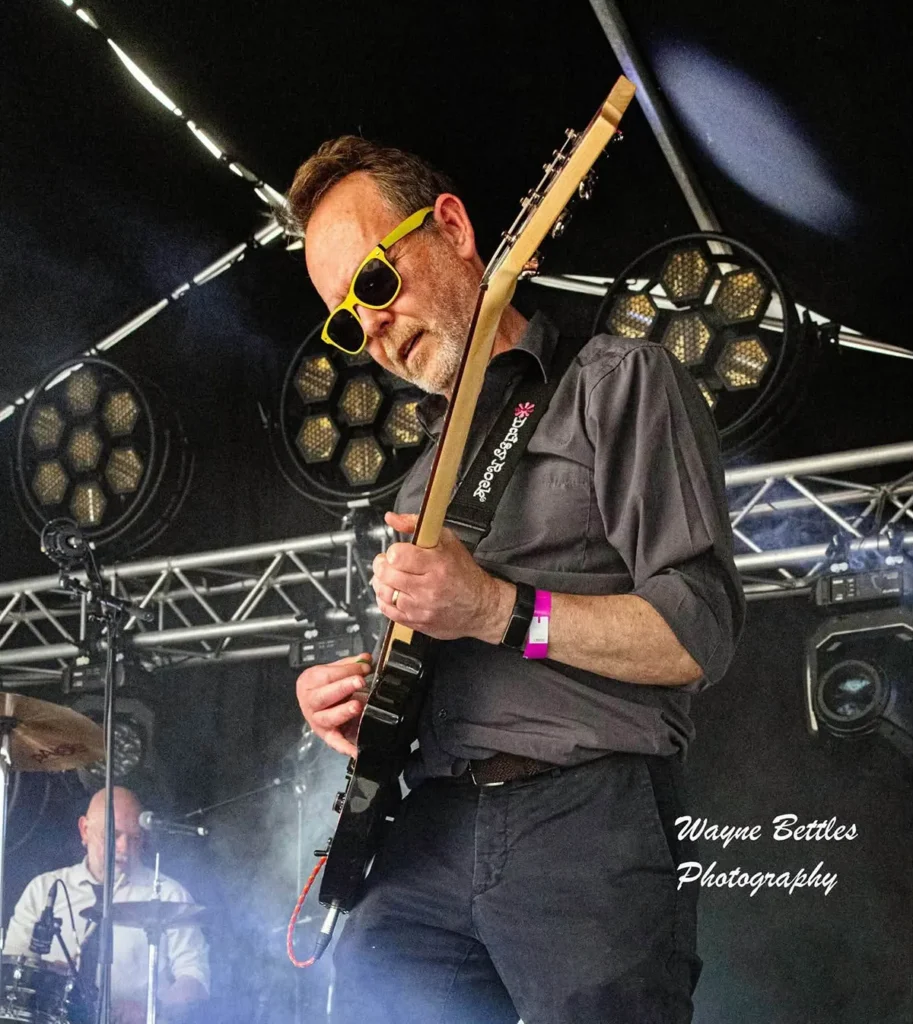
In my late teens and twenties, the bands I was in had an agent, and the agent would send us to every working men’s club in the North West of England, and sometimes much further afield. If you’re too young to have experienced the working men’s club circuit: imagine playing funk to an audience holding meat raffle tickets.
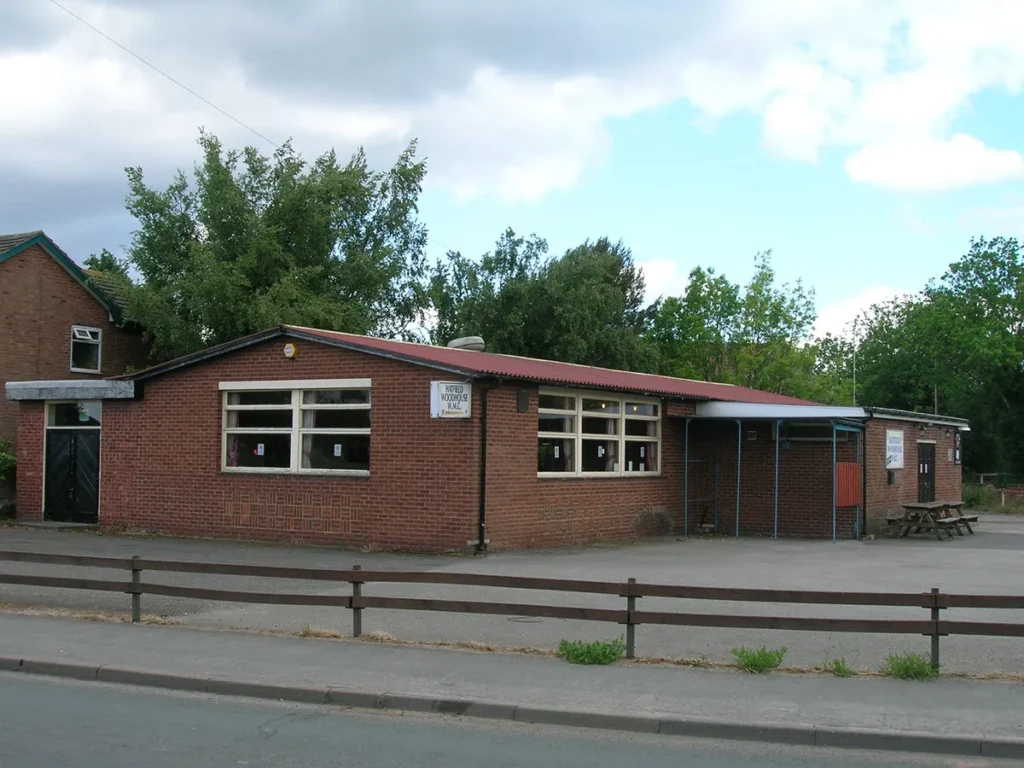
There’s nothing like being stuck in a van on a motorway for hours, pre and post gig, for building camaraderie with the other band members. You learn a lot in those years. Mainly where the best kebab shop is (it was opposite the bombed-out church in central Liverpool but sadly no more). And you learn, quickly and exactly once, never to plonk your amp down on the bingo table.
The Hull incident
One occasion, at a venue near Hull, we were booked wrongly. The audience were expecting a 50’s throwback jive band, proper rock ‘n’ roll with brothel creepers and flared skirts, the whole lot. We were not that. We were funk and soul. So they sat through our set dutifully, arms folded, and the moment we finished, the DJ ripped straight into Bill Haley and the entire room got up Jitterbugging, several of them giving us the finger on the way past.
‘Character building’ lands a bit differently when you’re neurodivergent (as I am). A room full of people jiving at you in disapproval is exactly the sort of thing my brain likes to file away and replay at 3am, decades after everyone else in that club has forgotten we existed. How performance and neurodivergence rub along together is a whole post of its own maybe.
Back then, these gigs probably paid thirty quid or so to each band member. Minus, of course, the agent’s 15% off the top. And yes, the booking was the agent’s mistake, not ours but we still got paid. We got our thirty quid and the finger.
So why take them?
Because of what those nights teach you, and there is no other way to learn it.
Practising at home teaches you to play the guitar. A £30 gig teaches you to perform, which turns out to be a different skill almost entirely. Four hours in a bedroom is nothing compared to being hammered on the white-hot anvil of a live performance, worrying about that solo coming up while simultaneously stressing about your flaky guitar cable. It teaches you what to do when the sound is terrible, when the crowd is indifferent or actively hostile, when the room wants something you’re not.
It also teaches you something about volume, when to lay off and when to be loud. Dynamics are a live skill, nobody learns them in a bedroom because in a bedroom there’s nothing to be heard over or a vocalist to compensate for,.
Jamiroquai’s keyboard player, Matt Johnson, says the same thing when asked what advice he gives young musicians: get out and play as much as you can, it doesn’t matter if it’s to three old ladies down at the town hall, just play, play, play, because it’s the only way to build up your confidence and experience as a performer. His advice is essentially: go and die in a working men’s club near Hull first.
His whole story is worth a watch: How to become a successful musician: My Story.
There’s a less obvious reason too. Every gig, however grim, is a room full of people you didn’t know before, and bands are built out of exactly that. The gigs that pay nothing are how you end up in the bands that pay something. Nobody forms a band with the guitarist who stays home until the offers improve.
And somebody in that room is always planning something. Do enough of these gigs and the invitations start arriving: a private party, a beer festival. Much more fun, and with an audience that actually wants you there, sympathetic, engaged, and usually several drinks in. (Weddings, meh. Awful gigs to play. Nobody’s interested and you’re, rightly, meant to be background, until everyone’s drunk of course.) The difference between playing to a room that’s waiting for the bingo and a room that’s chosen to see you is hard to overstate, and the second kind of room is unlocked by surviving the first.
Does the rule still apply?
Well, currently I’m in a punk / post-punk covers band and the singer came up through all of this too, and it shows. he’s a great performer and crowd engager precisely because of those years. And the band is now reaping what those decades sowed. We have a huge following on social media, the gigs are regular and well attended, and the money is better. Not hugely better, but it does go a lot further towards ‘compensating’ you for your efforts.
That’s the thing about the £30 apprenticeship, the payoff arrives years later, in a different band, in front of a different crowd.
And yes, forty years on, I can still tell you exactly where not to put an amp in a working men’s club, not that I play them much anymore.